San Antonio 1604 and 410 Loop Truck Accidents
100% free. Done in 3 minutes.



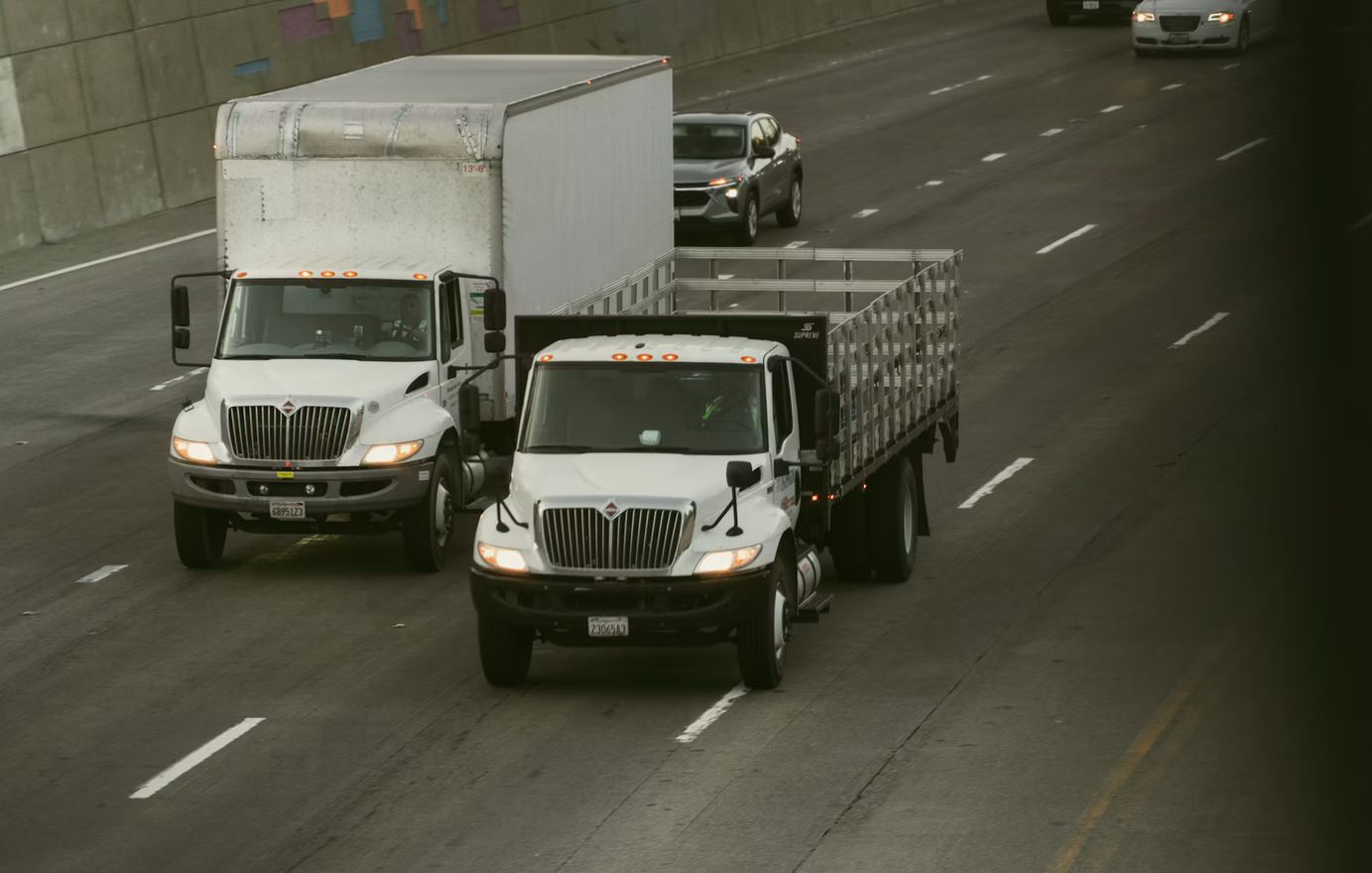
A truck accident is a collision involving a commercial truck, such as an 18-wheeler, box truck or delivery van, and it tends to cause severe injuries because a loaded tractor-trailer can weigh up to 80,000 pounds and needs far more room to stop than a car.
If a truck hit you on either loop, you may pursue medical bills, lost wages, pain and suffering, and lost earning capacity. It is a personal injury claim with more rules, more records and more insurance than an ordinary car wreck.
Serving all of San Antonio and the Hill Country and every stretch of Loop 1604, Loop 410 and I-10 in between. Our aggressive San Antonio truck accident attorneys are ready to take your case to trial. A trial-tested team beside you, no matter the size of your claim.
Truck accident case results from our of-counsel lawyers
- $2.25 million for a father and son in a T-bone crash, won by proving the driver was on the job rather than commuting (Jorge Mares Of Counsel to JRE Injury Law, with co-counsel David Fuentes).
- More than $200,000 for a client injured in an 18-wheeler crash (Shaw Cowart, LLP – Ethan L. Shaw Of Counsel to JRE Injury Law).
- $125,000 by judgment against a trucking company in Babineaux & Mink v. Trammel Time Trucking, LLC (Shaw Cowart, LLP – Ethan L. Shaw Of Counsel to JRE Injury Law).
- Youngblood v. Fell, a four-fatality crash involving a rental truck, resolved by confidential settlement with Ethan L. Shaw, Of Counsel to JRE Injury Law, as lead counsel.
- Bond & Wheeler v. Builders Systems Group: a confidential settlement for two workers hurt in a commercial auto accident (Shaw Cowart, LLP – Ethan L. Shaw Of Counsel to JRE Injury Law).
- Confidential resolutions in other commercial trucking cases (Shaw Cowart, LLP – Ethan L. Shaw Of Counsel to JRE Injury Law).
- Mr. Shaw has also defended an 18-wheeler operator to a take-nothing verdict in Deleon v. Merrick, so he knows how trucking companies and their insurers defend these cases.
Clients rate us 5.0 stars across 343 Google reviews. When you call, you speak with a personal injury attorney, not a call center, in English or Spanish.
Call our San Antonio office at (210) 272-0101 or use our secure online contact form for a free case review. You Pay Nothing Unless You Win.
What should you do in the first week after a truck accident on Loop 1604 or Loop 410?
In the first week, get your injuries documented while your truck accident attorney starts collecting the evidence the trucking company controls. Start with these steps:
- Get checked the same day, even if you feel fine. University Hospital, the Level I trauma center in the South Texas Medical Center, and Brooke Army Medical Center treat the most serious loop injuries.
- Note whether SAPD, the Bexar County Sheriff’s Office or DPS troopers worked the crash.
- Photograph the cab door, the trailer number and any hazard placard.
- Turn down the carrier’s request for a recorded statement, which adjusters use to shift blame to you.
- Order the CR-3 crash report from the TxDOT Crash Report Online Purchase System once it posts.
Once you call, we schedule your chiropractic, therapy, imaging and doctor visits and handle your vehicle repair or total-loss claim, so you can focus on healing.
How do I find out which company owns the rig?
Find the USDOT number on the cab door and enter it in FMCSA’s SAFER company snapshot, which shows the carrier’s legal name, address and inspection history.
Did the highway cameras over the loop record my crash?
Almost certainly not. TxDOT states that its camera footage is not recorded, so the TransGuide cameras above both loops show live traffic only, and the truck’s dash camera, nearby business video and witness phones matter more.
Why do so many loop wrecks happen at interchanges, flyovers and frontage roads?
They happen there because both loops force heavy trucks to merge, climb ramps and cross frontage-road intersections within short distances. Loop 410 meets I-10, I-35, I-37, US-281 and US-90, and the rebuilt I-10 interchange on Loop 1604 near UTSA now has all eight flyover ramps open, some more than 120 feet above the ground.
Weaving is the core danger: a tractor-trailer entering at one ramp may have to cross several lanes before the next exit, sideswiping whoever sits in its blind spot. On March 11, 2026, an 18-wheeler crash closed the ramp from southbound Loop 410 to I-37.
On the Northeast Side, I-35 NEX is adding elevated connectors into both loops; our page on truck crashes along I-35 covers that corridor.
Frontage roads carry their own rule. Under Transportation Code § 545.154, a frontage-road driver must yield to vehicles coming off the highway and to vehicles leaving for an entrance ramp, so a truck that cuts off a car leaving the exit ramp has broken it.
Who is at fault when a turning semi squeezes my car against the curb?
Usually the truck driver. State law requires a right turn to hug the right-hand curb as closely as practicable (§ 545.101), and the Texas Commercial Motor Vehicle Drivers Handbook tells truckers to keep the trailer’s rear near the curb and swing wide only as they complete the turn, not to the left as they start it.
Can the trucker blame a car that cut him off at the merge?
He can ask for a sudden emergency jury instruction, but it is an instruction, not a defense. Under Dillard v. Texas Electric Cooperative (Tex. 2005), it applies only to an emergency that was sudden, unexpected, not caused by the driver’s negligence and required immediate action, and only if he then acted with ordinary care, so an emergency his own tailgating created does not qualify.
Who is responsible when an 18-wheeler rear-ends stopped traffic on the loop?
The truck driver usually is, and the trucking company usually answers for that driver’s negligence when the driver was working. Transportation Code § 545.062 requires a driver following another vehicle to keep an “assured clear distance,” meaning enough room to stop safely for the speed, traffic and road conditions. No rule makes the rear driver automatically at fault, so a truck accident lawyer has to prove what the trucker did wrong.
Stop-and-go queues are the loops’ signature hazard. Traffic stacks up approaching the I-10, US-281 and I-35 interchanges, and a loaded semi needs far more room to stop than a car does. A driver glancing at a phone or dispatch screen closes that gap in seconds.
The carrier can also be liable in its own right, for example for hiring an unsafe driver or setting a schedule no one could meet legally. We explain those rules on our page about 18-wheeler and truck accident claims. If you were partly at fault, you can still recover when your share is 50 percent or less, with your award reduced by that percentage (CPRC §§ 33.001, 33.012).
Can the truck’s own camera prove how close it was following?
Often, yes. Many fleets run forward-facing cameras and collision-warning systems that can record speed, braking and following distance, and we demand that data in writing before the carrier can overwrite it.

How does JRE Injury Law prepare a loop truck case for trial?
We build your case from the first week as if a jury will decide it, because trucking insurers price their offers by how a case would hold up in court. Mr. Echavarria began his career as an Assistant Criminal District Attorney in Bexar County, and most loop injury cases are heard in the Bexar County District Courts, the same courthouse where he prosecuted.
Our trial preparation also draws on Ethan L. Shaw, Of Counsel to JRE Injury Law and a partner at Shaw Cowart LLP, who is Board Certified in Personal Injury Trial Law and Civil Trial Law by the Texas Board of Legal Specialization.
Preparation never means silence. Mr. Echavarria returns calls himself, including evenings, and a named case manager keeps you updated every step of the way.
As personal injury lawyers, we work on contingency: Pay Nothing Unless You Win.
Call (210) 272-0101 to start a free case review in San Antonio today.
Where along San Antonio’s loops do our cases come from?
Our attorneys handle cases from every stretch of both highways, and these points draw the heaviest traffic:
- Loop 1604 at I-10, beside UTSA, The Rim and La Cantera
- Loop 1604 at US-281, the gateway to Stone Oak
- Loop 1604 from Redland Road east to I-35, inside today’s expansion work zones
- Loop 1604 at Culebra Road and SH-151 on the far West Side
- Loop 410 at US-281, beside the airport
- Loop 410 from I-10 west past Ingram Park Mall to Culebra Road
- Loop 410 at I-35 on the Northeast Side and at I-37 on the South Side
- Loop 410 at US-90 near JBSA-Lackland
What is a Loop 1604 or Loop 410 truck accident claim worth?
A loop truck accident claim is worth the full value of your losses, reduced by any share of fault assigned to you and limited by the insurance available to pay it. No honest average exists, because a sprained neck and a spinal fusion are both “truck cases.”
Your losses typically include:
- Past and future medical care
- Lost wages and lost earning capacity
- Physical pain and mental anguish
- Physical impairment and disfigurement
- Vehicle repair or replacement
Medical bills are where trucking insurers push hardest: they send your records to their own reviewers, argue the treatment went on too long and lowball your bills.
Why would the insurer count less than what the hospital billed?
State law limits recoverable medical expenses to the amount actually paid or incurred by you or on your behalf (CPRC § 41.0105, applied in Haygood v. De Escabedo, Tex. 2011). That is why a truck accident attorney builds the medical proof around what was paid, what is still owed and what future care will cost.
Can the hospital that treated me take part of my settlement?
It can file a lien. A hospital that admits you within 72 hours of the crash, or receives you by transfer, has a lien on your claim for reasonable and regular charges, limited to the lesser of its first 100 days’ charges or half your recovery (Tex. Prop. Code §§ 55.002, 55.004). The lien attaches to your claim, not your property, and the EMS lien does not apply here because it covers only counties of 800,000 people or fewer.
Past results do not guarantee a similar outcome; every case depends on its facts.
Questions about your bills after a San Antonio truck accident? Call (210) 272-0101 for a free case review.
Does the deadline change if a TxDOT truck caused your loop crash?
Yes. Both loops are state highways, so the public vehicle most likely to hit you there is a TxDOT maintenance or crew truck, and a claim against the state generally needs written notice within six months (CPRC § 101.101), with Texas Tort Claims Act caps of $250,000 per person and $500,000 per occurrence.
Otherwise, you have two years to sue (CPRC § 16.003), and wrongful death claims have two years from the death. A City of San Antonio truck requires notice within 90 days under the city charter. A child’s limit generally waits until age 18, though notice deadlines may still apply, and the discovery rule rarely helps after a crash.
What if the truck belonged to a private road contractor?
Then the ordinary two-year limit applies and the Tort Claims Act caps do not, because a contractor is a private company, even when its truck looks official.
Who pays when a truck crashes in a Loop 1604 or Loop 410 work zone?
The truck driver and carrier stay responsible for driving safely through a work zone, and the road contractor may share the blame. TxDOT’s $1.4 billion Loop 1604 North Expansion is rebuilding the loop from SH 16 to I-35, and its last segment, Judson Road to I-35, broke ground in summer 2026, with the whole project expected to finish around 2029. A separate project is rebuilding Loop 410 near FM 78 into 2028.
Narrowed lanes, overnight lane shifts, concrete barriers and sudden queues punish a trucker who speeds or tailgates. State law doubles fines when workers are present, though for speeding only if the zone is signed (§ 542.404), and TxDOT may restrict trucks to a specific lane in a work zone after a traffic study (§ 545.0653).
Can the road contractor share the blame for my crash?
Sometimes. Under CPRC § 97.002, a contractor building a road for TxDOT is shielded from liability if it complied with the contract documents material to the condition that caused the crash. If it did not, that shield falls away, and its own negligence can be weighed alongside the trucker’s.
What records show how the work zone was set up that night?
TxDOT’s traffic control plans, lane-closure notices and the project’s daily work reports show which lanes were closed and where signs and barriers stood. Your truck accident lawyer should request them early, because a work zone can change within a week.
What causes truck accidents on Loop 1604 and Loop 410?
Congestion is the common thread, because a loaded truck cannot stop or change lanes as fast as the cars around it. The 2024 Texas Top 100 Congested Road Segments report from TxDOT and the Texas A&M Transportation Institute ranked Loop 410 North from US-281 to I-10 No. 38 statewide and Loop 1604 North over the same span No. 53, and the 2025 edition found statewide truck delay up 16 percent in 2024.
The causes we see most on the loops:
- Following too closely in the queues at the US-281 and I-10 interchanges
- Unsafe lane changes and blind-spot sideswipes in weaving sections
- Fatigue on long hauls that use the loops to bypass downtown
- Wide right turns off frontage roads at signalized intersections
- Brake and tire failures from skipped maintenance
- Cargo that shifts on ramps because it was overloaded or poorly secured
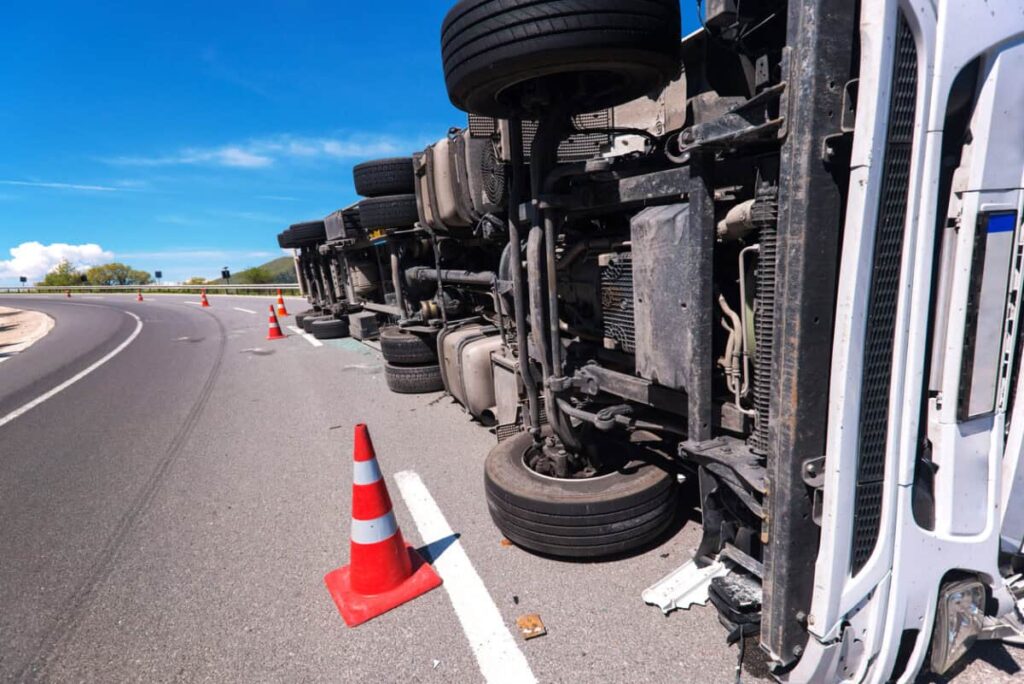
Loss of control turns deadly fast: in April 2025, a big rig hit the barrier on eastbound Loop 410 near Starcrest Drive, flipped and caught fire, killing its driver. Many loop trucks are also running I-10, which our page on I-10 truck injury claims covers.
What if a trailer came loose from a pickup on the loop?
The driver who hitched it can be held responsible, because state law requires safety chains between a passenger car or light truck and the trailer it tows (§ 545.410). If the pickup was out on company business, the employer may answer for the crash too.
What happens when a tanker or hazmat load crashes on Loop 410?
A hazmat crash can add fire, chemical exposure and long closures to the usual injuries, and it leaves a paper trail that proves what the truck carried. Loop 410 carries that risk by design: under San Antonio’s hazardous materials routing plan, listed in FMCSA’s national route registry, all of I-410 in Bexar County is a prescribed route for placarded hazardous loads, while stretches of I-10, I-35 and I-37 near downtown are closed to them.
Three details matter in these cases:
- The placard: its four-digit number identifies the material and tells your doctors what you were exposed to.
- The shipping paper: federal rules require the driver to keep it within reach and readily available to authorities after a crash (49 C.F.R. § 177.817), and it describes what the truck was carrying.
- The tank: commercial driver’s license manuals warn that a tanker can turn over at the speed posted for a curve, and state law requires every driver to slow appropriately around curves (§ 545.351).
Responsibility can reach the carrier and, when a leak traces back to loading, the company that loaded the tank. Under CPRC § 33.013, a defendant found more than 50 percent responsible can be held liable for all of your damages, not only its share.
What if smoke or chemicals from the crash made me sick?
Those injuries belong in your claim like any other. Tell the ER exactly what you breathed or touched, and write down the placard number if you saw it.
Which loop truck accident cases do we take?
As truck accident lawyers, we take cases involving every kind of commercial vehicle on the loops, including:
- 18-wheelers and tractor-trailers on through routes and interchange ramps
- Dump trucks, concrete mixers and flatbeds serving the Loop 1604 construction corridor
- Fuel tankers and hazmat carriers on Loop 410
- Rented moving trucks driven by people who have never handled a vehicle that size
- Box trucks and UPS and FedEx delivery trucks working the frontage-road retail strips
- Amazon delivery van collisions on frontage roads and at loop intersections
- Company pickups towing trailers and equipment
- Wrongful death claims for families who lost someone in a loop truck crash
Talk to an attorney today about your San Antonio loop truck crash
If a truck hit you on Loop 1604 or Loop 410, call (210) 272-0101 or toll-free (844) 702-0350, day or night, to talk with a San Antonio truck accident lawyer at JRE Injury Law. Pay Nothing Unless You Win.
Frequently asked questions about Texas injury cases
Our attorneys build every file as though a jury will see it. Contact us today to start your case with a trial-tested advocate on your side.