
San Antonio Personal Injury Lawyers
JRE Injury Law is a San Antonio personal injury law firm that represents people injured by car and truck crashes, motorcycle wrecks and other accidents.
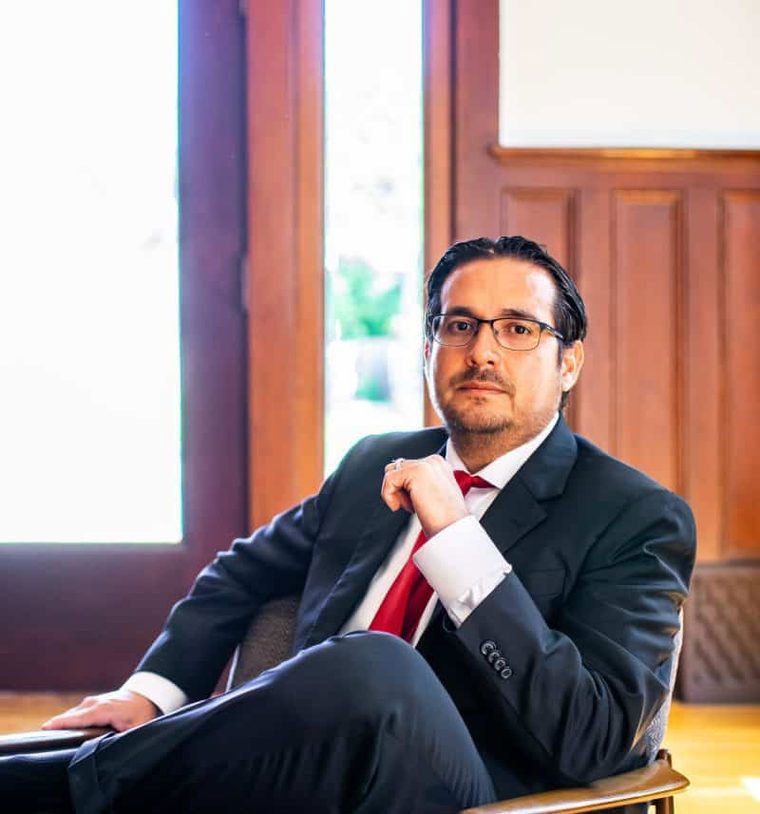
Our founder, Joseph R. Echavarria, is a former Bexar County prosecutor who has handled injury claims since 2007 and recovered tens of millions of dollars for injured Texans and their families.
100% free. Done in 3 minutes.


A personal injury claim is a legal demand for payment from the person or company whose carelessness hurt you, and it tends to turn on evidence because the law makes you prove both fault and your losses, usually within two years of the injury.
If someone else’s carelessness hurt you, you may pursue medical bills, lost wages, pain and suffering, and lost earning capacity. It is a personal injury claim against the person or company at fault, though in practice that party’s insurance company usually pays it, and fights it.
Joseph R. Echavarria of JRE Injury Law is a San Antonio personal injury attorney and former Bexar County prosecutor who has represented injured Texans since 2007.
Serving all of San Antonio and the Hill Country and every stretch of Loop 410, US-281 and I-35 in between. Our aggressive injury and accident lawyers are ready to take your case to trial. A trial-tested team beside you, no matter the size of your claim.
Clients rate us 5.0 stars across 343 Google reviews. When you call, you speak with a personal injury attorney, not a call center, in English or Spanish.
Call our San Antonio office at (210) 272-0101 or use our secure online contact form for a free case review. You Pay Nothing Unless You Win.
Types of Cases We Handle
We handle injury cases caused by someone else’s carelessness, with commercial vehicle crashes at the top of our list. Here is what each type of case involves:
- Car accidents: the most common claim we handle, from T-bone crashes at intersections to freeway pileups where several drivers share the blame.
- 18-wheeler and commercial truck accidents: Trucking companies must follow federal rules on driver hours, maintenance and hiring, and those records often prove fault in crashes along the I-10 freight corridor and across the city.
- Amazon and delivery van crashes and rental truck accidents: these claims turn on who employed or controlled the driver, and whose insurance pays.
- Sports and exotic car crashes: high-horsepower cars reach dangerous speeds in seconds, and these cases often turn on speed and on whose insurance covers a borrowed or rented car.
- Motorcycle accidents: riders suffer severe injuries and face adjusters who assume the biker was reckless, so we build the evidence that shows what the driver did wrong.
- Uber and Lyft accidents: coverage depends on the driver’s app status at the moment of the crash, with up to $1 million in coverage once a ride is accepted.
- E-scooter accidents: Bird and Veo riders are hurt by careless drivers, road defects and equipment failures, and signing the rental agreement does not always end the claim.
- Bicycle accidents: cyclists have the same right to the road as drivers, and with no protection around them, even a low-speed collision can cause serious injury.
- Pedestrian accidents: drivers must yield to people in crosswalks, and a pedestrian struck by a car often faces months of recovery.
- Wrongful death: when a crash takes a life, the family can recover for their loss, and the estate can recover for what the person suffered before death.
- Carbon monoxide poisoning: exposure from defective heaters, generators or vehicle exhaust leaks can cause lasting brain injury, even when early ER readings look normal.
- Bus crashes and injuries while driving for work: claims against transit and charter operators, and against employers whose drivers or vehicles caused harm.
- Defective vehicle parts: airbags that fail to deploy, tire blowouts and other defects can add the manufacturer to your claim.
- Brain, spinal cord and catastrophic injuries: life-changing injuries that call for a claim built around the full cost of future care.
- And many others, including specific accident types that are too graphic to list here. Please contact us.

What records should you start keeping the day you get hurt?
Start with the records that prove how you were hurt, what the injury did to your body, and what it has cost you.
- Get examined at an emergency room, such as University Hospital, the area’s Level I trauma center, even if you feel fine.
- Ask the responding officer from SAPD or the Bexar County Sheriff’s Office for the report number, then buy the crash report (Form CR-3) from the TxDOT crash report portal.
- Photograph the scene, the vehicles and your injuries, and save witness contacts.
- Keep every bill, receipt and missed-work note in one folder.
- Write a few lines each day about your pain, your sleep and what you can no longer do.
Talk to a personal injury lawyer before you give any insurer a statement. Once you call, we take over: we gather records, arrange chiropractic, physical therapy, imaging and physician appointments, and handle your vehicle repair or total-loss payout alongside the injury claim.
Should you post about the crash or your injuries online?
No. Adjusters search Facebook, Instagram and TikTok for photos suggesting you aren’t really hurt, so go private and stop posting until the case ends.
Why does a gap in treatment hurt your claim?
A gap of weeks between the injury and your first doctor visit lets the insurer argue that something else caused your pain. Adjusters push this hardest in soft-tissue cases such as rear-end collision injuries, so keep every appointment and tell us if cost or a ride is the problem.
How do insurance companies try to shrink your claim?
Insurance companies shrink claims by getting you on the record early, offering quick money before your injuries are fully known, and blaming your pain on something other than the crash.
- The recorded statement: casual answers about pain or fault, later quoted against you.
- The fast check: an early offer with a release that ends your claim, often before an MRI shows the real damage.
- The pre-existing condition argument: blaming an old back or neck problem.
- The paper review: in-house doctors who dispute your treatment without examining you.
- The slow walk: delays that burn time as the filing deadline approaches.
Our team knows that playbook. Edmundo “Eddie” Leandro III, Of Counsel to JRE Injury Law, is a former Cameron County Assistant District Attorney and an insurance-defense trial lawyer at Lawler • Leandro. He has sat on the other side of the table, so he knows how insurers evaluate, reserve and defend a claim.
Ethan L. Shaw, Of Counsel to JRE Injury Law and a partner at Shaw Cowart, LLP, was lead counsel in Soignet v. Liberty Mutual, Fulda v. Hartford and Binagia v. Aetna Casualty & Surety, insurance bad-faith cases that each ended in a jury verdict followed by a confidential settlement. Our clients describe insurers that refused valid claims until we made them pay.
Do you have to give the other driver’s insurer a recorded statement?
No. You owe the other driver’s insurer no statement at all, and we can handle any cooperation your own policy requires.
Can you hold your own insurer accountable for stalling?
In some cases, yes. State law lets policyholders pursue their own insurer for unfair handling of a claim under their policy, such as underinsured motorist coverage; the other driver’s insurer owes those duties only to its own customer.
Past results do not guarantee or predict a similar outcome. Every case is different and depends on its own facts.

Who can be held responsible for your injuries?
Anyone whose carelessness caused your injury can be held responsible, often more than one party. Proving negligence takes four elements: a duty of reasonable care, a breach of it (texting, speeding, running a red light), an injury the breach caused, and real losses.
A personal injury lawyer’s first job is finding every party who shares the blame:
- At-fault drivers and their auto insurers
- Employers whose drivers were on the job, such as delivery van and parcel truck drivers, because a company answers for an employee acting in the course and scope of the job (respondeat superior)
- Vehicle owners who lend a car to a driver they know is reckless or unlicensed (negligent entrustment)
- Bars that serve an obviously intoxicated customer who is a clear danger to others, when the intoxication causes the crash (dram shop liability)
- Manufacturers of defective airbags, tires and vehicle parts
- Government agencies, within the limits of the Texas Tort Claims Act
- Dog owners who knew their dog was dangerous
Your own share of fault matters too. Under the rules in CPRC § 33.001 and § 33.012, your recovery drops by your percentage of fault, and you recover nothing if you are more than 50% responsible. On a $100,000 claim, a finding that you were 20% at fault leaves $80,000.
Does it matter which defendant can actually pay?
Yes. Under CPRC § 33.013, a defendant found more than 50% responsible can be made to pay the entire damages award, not just its share, which matters when another defendant has little or no insurance.
Why does a trial-ready team matter in Bexar County’s courts?
JRE Injury Law builds every case to be tried, because insurers pay what a claim is worth only when they believe a jury will hear it. Most injury cases here are heard in the Bexar County civil district courts at the courthouse at 100 Dolorosa.
Mr. Echavarria began his career as a prosecutor in the county’s criminal courts at the Cadena-Reeves Justice Center, on the same downtown street. Since then, he has recovered tens of millions of dollars for injured clients.
Mr. Shaw is Board Certified in Personal Injury Trial Law and Civil Trial Law by the Texas Board of Legal Specialization, a distinction his firm notes fewer than 3% of lawyers in the state hold, and he has practiced for more than 35 years.
His signature case, Tate v. Discover Property & Casualty, was tried with co-counsel Tom Rhodes in the 225th District Court, one of the county’s civil district courts. The jury returned a verdict of about $70 million against an insurer that wrongfully denied an injured worker’s benefits, the award was affirmed on appeal, and Lawyers USA ranked it among the most significant litigation results of 2009.
Our attorneys’ results also include:
- A $2.25 million settlement for a father and son hurt in a T-bone crash (Jorge Mares, Of Counsel to JRE Injury Law, with co-counsel David Fuentes). The defense claimed the driver was only commuting; one deposition of the driver established liability and defeated the employer’s attempt to escape responsibility.
- A jury verdict of more than $2 million in an underinsured-motorist claim, Telfort & Nunez v. State Farm Mutual Automobile Insurance Co. (Shaw Cowart, LLP).
Outside the courtroom, a named case manager keeps you updated at every step, and Mr. Echavarria returns calls himself, even in the evening.
How do insurers put a number on your injury claim?
Insurers value a claim as your documented losses, reduced by any fault they can pin on you, and limited by the insurance available. Using billing codes, claims software and a jury prediction, they discount any loss you can’t prove.
Mr. Leandro knows that math from the inside. His firm, Lawler • Leandro, tried an auto case for an insurer in which the plaintiffs demanded more than $3.5 million; the jury awarded $115,078.81, slightly above the insurer’s pre-trial offer of about $100,000. The lesson: proof, not the size of the demand, moves the offer.
| What the insurer weighs | What it includes | How it moves value |
|---|---|---|
| Economic losses | Medical bills, future care, lost wages, lost earning capacity, vehicle damage | Sets the floor; every documented dollar counts |
| Non-economic losses | Physical pain, mental anguish, physical impairment, disfigurement | Often the largest share; depends on medical proof of how your life changed |
| Your share of fault | The percentage a jury could assign to you | Cuts recovery by that percentage; more than 50% bars recovery |
| Available insurance | The at-fault policy (state minimum 30/60/25 under Transp. Code § 601.072), your UM/UIM coverage, any company policy | Caps what can realistically be collected |
You can recover every economic and non-economic loss in the table, plus out-of-pocket costs. When a crash takes a life, families bring wrongful death and survival claims under CPRC § 71.002 and § 71.021.
Why do adjusters fight hardest over pain and suffering?
Because pain has no receipt. Adjusters discount it unless your doctors’ notes, your journal and the people who know you show how the injury changed your life.
When can a jury punish the person who hurt you?
Only when you prove fraud, malice or gross negligence by clear and convincing evidence under CPRC § 41.003, and those exemplary damages are capped under § 41.008.
Past results do not guarantee or predict a similar outcome. Every case is different and depends on its own facts.
Who pays your medical bills before the case settles?
Your own coverage usually pays first, because the at-fault driver’s insurer pays only at settlement or verdict, while bills from University Hospital, Methodist Hospital or Brooke Army Medical Center keep arriving.
Personal injury protection (PIP) comes first. It is included in every auto policy unless you rejected it in writing (Ins. Code § 1952.152), carries at least $2,500 in benefits (§ 1952.153), and pays no matter who caused the crash. See Chapter 1952 of the Texas Insurance Code.
Health insurance picks up where PIP runs out, and your plan may ask to be repaid from the settlement, depending on its terms. We account for that, and we arrange chiropractic, physical therapy, imaging and physician appointments so treatment keeps moving.
Do you have to repay PIP out of your settlement?
No. Under § 1952.155, your PIP insurer has no right of subrogation, so the benefits it paid are not taken back from your recovery.
What if you turned down PIP when you bought your policy?
Then health insurance and any medical payments coverage pay first, and we map out how each bill gets covered.
How long do you have to file an injury lawsuit?
You generally have two years from the date of your injury to file a lawsuit under Civil Practice and Remedies Code § 16.003, and a wrongful death claim generally has two years from the date of death. Government claims move faster: the Tort Claims Act requires written notice within six months (CPRC § 101.101), and the San Antonio city charter requires written notice to the City Manager or City Clerk within 90 days for claims against the City.
For an injured child, the two years usually starts at the 18th birthday, and in rare cases the discovery rule delays the start until the injury could reasonably have been discovered.
Does negotiating with the adjuster stop the two-year clock?
No. Settlement talks do not pause the deadline, and a claim neither settled nor filed by then is usually lost for good.
What if a military or federal vehicle hit you near a JBSA base?
A crash caused by an on-duty federal employee is generally a claim against the United States under the Federal Tort Claims Act (FTCA), with its own forms and deadlines. Joint Base San Antonio, including JBSA-Fort Sam Houston, JBSA-Lackland and JBSA-Randolph, puts government vehicles on Loop 410, I-35 and I-10 every day. U.S. Postal Service vehicles fall under the same act (39 U.S.C. § 409(c)).
- You file a written claim with the agency, usually on Standard Form 95, within two years of the crash (28 U.S.C. § 2401(b)).
- The agency has six months to decide, and six months of silence may be treated as a denial (§ 2675(a)).
- After a denial, you have six months to file suit (§ 2401(b)).
- A federal judge, not a jury, decides the case (§ 2402), and punitive damages are not available (§ 2674).
Private contractors are generally not covered by the act, so a contractor’s driver is pursued like any other company’s.
Is an off-duty service member’s crash a federal claim?
Usually not. An off-duty service member in a personal car is generally pursued through that driver’s own auto insurance; the FTCA applies when a federal employee was acting within the scope of the job.

Talk to an Attorney in San Antonio Today
Get your free case review while evidence is fresh and the two-year clock is on your side.
Our San Antonio personal injury lawyers answer 24/7 at (210) 272-0101 or toll-free at (844) 702-0350, or you can reach us through our secure contact form. You Pay Nothing Unless You Win.
JRE Injury Law · 931 Basse Road, San Antonio, TX 78212