Texas Interstate 10 Truck Accident Lawyer
100% free. Done in 3 minutes.



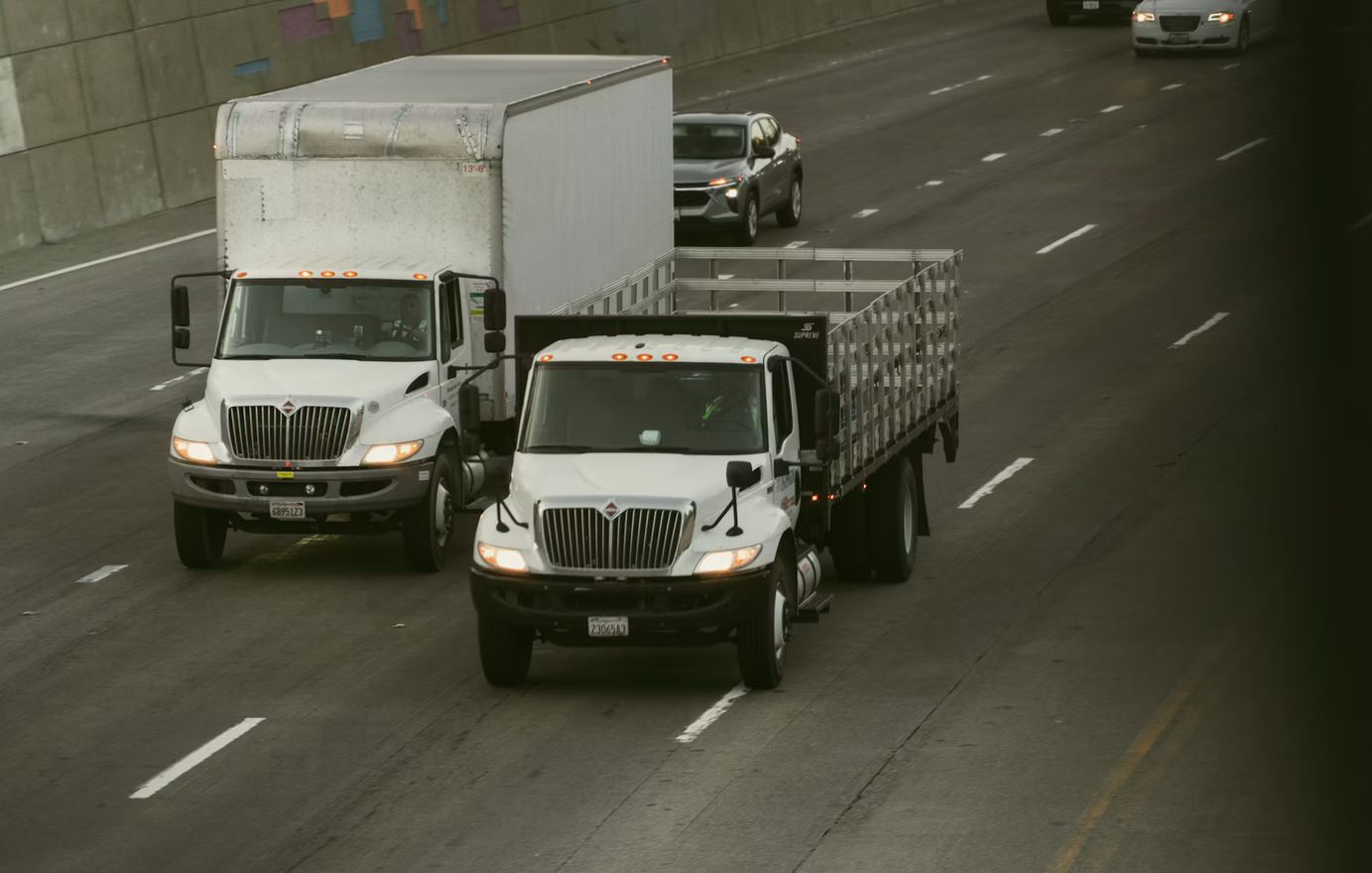
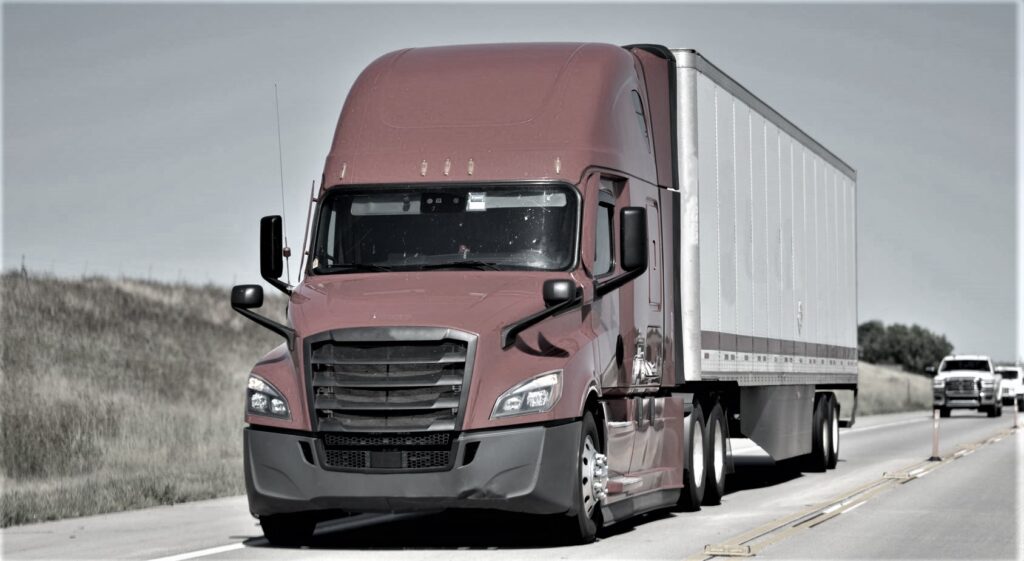
An I-10 truck accident is a collision between a commercial vehicle, such as an 18-wheeler or delivery truck, and another vehicle on Interstate 10, and it causes severe injuries because a loaded tractor-trailer can weigh up to 80,000 pounds, about 20 times as much as a family car.
If a truck driver or trucking company caused your crash, you may recover your medical bills, lost wages, pain and suffering, and the future income your injuries will cost you.
You are hurting, you may be missing work, and an adjuster is probably already calling for “a quick statement.” You do not have to face that alone. Talk with an experienced Texas truck accident lawyer for your I-10 crash and injuries today.
Clients rate us 5.0 stars across 350+ Google reviews, and many mention that Mr. Echavarria called them back himself.
For a free case review about your I-10 truck crash, call (210) 272-0101 or send us a secure message. We serve you in English and Spanish.
What evidence does the trucking company control after an I-10 crash?
The carrier holds most of the proof: electronic logging device (ELD) records, “black box” engine readings, dash-cam video, the driver qualification file, maintenance records, and the results of post-crash drug and alcohol tests. A truck accident lawyer’s first job is to lock that evidence down before it disappears.
A spoliation letter is a written demand to preserve evidence, and it matters because a court can penalize a company that destroys evidence after receiving one. We send ours fast, and we request the peace officer’s crash report (CR-3) through the TxDOT crash report portal.
Federal rules also require the carrier to test its driver after serious crashes (49 CFR § 382.303). Testing is mandatory after any crash that kills someone, and after a crash where the driver is cited and someone is treated away from the scene or a vehicle has to be towed. If the alcohol test is not given within two hours, the carrier must document why, and it must stop trying after eight hours; the drug-testing window closes at 32 hours. A skipped test is its own safety violation.
While we build the case, we arrange your medical care and handle the vehicle repair or total-loss payout. This corridor work is part of our San Antonio 18-wheeler accident lawyer practice.
What should I do right after an 18-wheeler hits me?
Protect your health first, then your claim:
- Get medical care right away; the most seriously hurt are often taken to University Hospital, a Level I trauma center.
- Call 911 so DPS troopers, deputies, or local police document the crash.
- Photograph the truck, its USDOT number, the trailer, the scene, and your injuries, and collect witness names and phone numbers.
- Decline any recorded statement to the trucking company’s insurer.
- Call us before you sign anything or accept a check.
Can you sue an out-of-state trucking company in Texas?
Yes. A crash on the Texas stretch of I-10 lets Texas courts hear the case against the carrier whose truck caused it, and every interstate carrier must designate process agents to accept legal papers on a federal filing called the BOC-3 (49 CFR § 366.4). A carrier with full operating authority names agents in all 48 contiguous states and Washington, D.C.
I-10 carries freight from California to Florida, so the truck that hit you may belong to a company based a thousand miles away. The USDOT number on the cab unlocks the carrier’s federal record: its registration, insurance filings, inspection results, and crash history. We pull that record in the first days, because out-of-state carriers still send rapid-response teams to the scene within hours.
Under Tex. Civ. Prac. & Rem. Code § 15.002, the case can be filed in the county where the crash happened, which keeps an out-of-state company in a Texas courtroom, or in the county of a company’s principal office in Texas. Our San Antonio personal injury lawyers handle these cases from start to finish.
Who is legally responsible for the crash that hurt you?
Anyone whose carelessness caused the crash can be responsible, and truck cases often involve several parties. Negligence means failing to use reasonable care, and you prove it with four elements: a duty to act safely, a breach of that duty, causation linking the breach to the crash, and damages, meaning real harm to you.
A trucker who tailgates in stop-and-go traffic breaches the duty every driver owes, and the rear impact that herniates your disc supplies causation and damages. Common defendants and the rules that reach them:
- The truck driver: negligent driving, such as speeding, fatigue, or phone use.
- The motor carrier: respondeat superior, which makes employers pay for workers’ on-the-job negligence, plus negligent hiring or entrustment of an unsafe driver.
- The shipper or loader: negligence when an overweight or poorly secured load shifts or spills.
- The truck or parts maker: products liability for defective brakes, tires, or underride guards.
- A rental company: shielded as an owner by the federal Graves Amendment (49 U.S.C. § 30106), but liable for its own negligence, such as renting out worn-out equipment.
- A government truck: the Tort Claims Act (CPRC § 101.021) allows capped claims for a public employee’s negligent driving.
Can I sue the trucking company and not just the driver?
Yes. The carrier answers for its driver’s on-the-job negligence and its own safety failures. Under Chapter 72 of the CPRC, a carrier that admits the driver was working for it can keep most hiring evidence out of the first phase of a two-phase trial. That is why we build both claims from day one.
What happens when more than one party caused the crash?
The jury assigns each party a percentage of fault, and a party found more than 50 percent responsible can owe the entire award under CPRC § 33.013. Chain-reaction wrecks often add a passenger-car driver, whose share is handled like any car accident claim.
How JRE Injury Law Builds Your Case
We build each truck case around hard evidence, local courtroom knowledge, and steady contact with you. Truck cases from the San Antonio stretch of the interstate are often filed in the Bexar County District Courts on Dolorosa Street, in the same courthouse complex where Mr. Echavarria once prosecuted.
When trial experience matters most, we work with Ethan L. Shaw, Of Counsel to JRE Injury Law, who is Board Certified in Personal Injury Trial Law and Civil Trial Law by the Texas Board of Legal Specialization. Eddie Leandro on our team comes from an insurance-defense background, so he knows how a carrier’s lawyers build a file. We also bring in accident reconstructionists and trucking-safety experts and resolve medical liens.
Examples of Truck Accident Case Results of our Attorneys
- More than $200,000 for a client injured in an 18-wheeler crash (Shaw Cowart, LLP – Ethan L. Shaw Of Counsel to JRE Injury Law).
- $125,000 by judgment against a trucking company in Babineaux & Mink v. Trammel Time Trucking, LLC (Shaw Cowart, LLP – Ethan L. Shaw Of Counsel to JRE Injury Law).
- $2.25 million for a father and son in a T-bone crash, won by proving the driver was on the job rather than commuting (Jorge Mares Of Counsel to JRE Injury Law, with co-counsel David Fuentes).
- Youngblood v. Fell, a four-fatality crash involving a rental truck, resolved by confidential settlement with Ethan L. Shaw, Of Counsel to JRE Injury Law, as lead counsel.
- Bond & Wheeler v. Builders Systems Group: a confidential settlement for two workers hurt in a commercial auto accident (Shaw Cowart, LLP – Ethan L. Shaw Of Counsel to JRE Injury Law).
- Confidential resolutions in other commercial trucking cases (Shaw Cowart, LLP – Ethan L. Shaw Of Counsel to JRE Injury Law).
- Mr. Shaw has also defended an 18-wheeler operator to a take-nothing verdict in Deleon v. Merrick, so he knows how trucking companies and their insurers defend these cases.
Your attorney handles your case, not a call center, and a named case manager keeps you updated from start to finish. We meet you at home or in your hospital room, serve you in English and Spanish, and you Pay Nothing Unless You Win. Clients describe insurers that would not pay until we stepped in; read their words in our client testimonials.
Talk to an Attorney Today about your I-10 truck crash: call (210) 272-0101 or reach us online.
Which stretches of I-10 do we cover?
We represent people hurt anywhere on I-10 in Texas, and we know the stretch through our home region most closely:
- Kerrville: the Harper Road and SH 16 exits near Peterson Regional Medical Center.
- Boerne and Comfort: 18-wheeler crashes near Boerne at Johns Road, SH 46, and Scenic Loop Road, plus the US 87 junction.
- Northwest San Antonio: Ralph Fair Road, Camp Bullis Road, La Cantera, UTSA Boulevard, and the Medical Center exits.
- Downtown: the upper and lower decks and the overlap with the I-35 corridor.
- East side: the I-410 and SH 130 junction, Foster Road, Converse, and Loop 1604 near Randolph.
- Seguin: Santa Clara Road, the SH 46 and SH 123 exits, and the SH 130 toll split.
How much is my truck accident case worth?
Your truck accident case is worth the full value of your losses, reduced by any fault assigned to you and limited in practice by the insurance available. An honest truck accident lawyer will not quote a number on day one, because value turns on injury severity, treatment length, fault, and insurance.
| Injury profile | What drives value up or down | Typical resolution path |
|---|---|---|
| Minor soft-tissue injury that heals in weeks | Steady treatment raises value; care gaps and prior neck or back complaints lower it | Usually settles without a lawsuit |
| Moderate injury with fractures or surgery | Surgical records, time off work, and future care raise value; fault disputes lower it | Often settles after suit and depositions |
| Catastrophic or permanent injury (brain, spinal cord, amputation) | Life-care plans, lost earning capacity, and carrier safety violations raise value; policy limits can cap recovery | Prepared for trial; may resolve in mediation |
| Wrongful death | The person’s earnings, age, and family relationships drive value; gross negligence can add exemplary damages | Usually litigated; often mediated before trial |
Past results do not guarantee a similar outcome; every case depends on its facts.
How much insurance does a trucking company carry?
Federal law sets the minimum by what the truck hauls (49 CFR § 387.9):
| Carrier and cargo | Minimum liability coverage |
|---|---|
| Interstate for-hire carrier hauling general freight | $750,000 |
| Oil and other hazardous materials | $1,000,000 |
| Bulk hazardous substances, bulk explosives, certain poison gases, and highway-route-controlled radioactive loads | $5,000,000 |
Many carriers buy excess or umbrella policies above these minimums. Interstate policies also carry the federal MCS-90 endorsement, which makes the insurer pay a final judgment up to the federal minimum even when a policy exclusion would otherwise apply. When a carrier’s safety violations rise to gross negligence, exemplary damages may be added under CPRC § 41.003, capped by § 41.008.
If a truck hurt you on I-10, call (210) 272-0101 or contact us for a free case review.
What is the deadline to file an I-10 truck accident lawsuit?
You generally have two years from the crash to file a personal injury lawsuit under CPRC § 16.003, and families have two years from the date of death for a wrongful death claim. If a government vehicle was involved, the Tort Claims Act (§ 101.101) requires written notice within six months, and San Antonio’s city charter requires notice within 90 days for city vehicles. Minors and late-discovered injuries can have longer deadlines.
Evidence expires sooner than the law does. Carriers must keep hours-of-service records for only six months under 49 CFR § 395.8(k), so call early.
What if a federal vehicle hit you on I-10?
Claims against a U.S. Postal Service truck, a military vehicle, or another federal vehicle go through the Federal Tort Claims Act (FTCA), which requires you to file a written claim with the responsible agency within two years, and before you can sue (28 U.S.C. § 2401(b)). Military vehicles traveling to and from Joint Base San Antonio and Postal Service trucks both use I-10 regularly.
The FTCA process differs from an ordinary injury claim:
- The claim must demand a specific dollar amount, usually on Standard Form 95.
- The agency has six months to decide, and silence after six months can be treated as a denial (28 U.S.C. § 2675(a)).
- After a written denial, you have six months to file suit (§ 2401(b)).
- A federal judge, not a jury, decides the case (§ 2402), and punitive damages are not available (§ 2674).
The Postal Service falls under the FTCA (39 U.S.C. § 409(c)), but private contractors hauling mail or freight for federal agencies usually do not, so identifying the driver’s employer comes first.
Why do so many 18-wheeler accidents happen on I-10?
Most 18-wheeler accidents happen because of driver error, and I-10 adds long hauls, high speeds, and constant construction. The FMCSA’s Large Truck Crash Causation Study (2006 report to Congress) found that when a truck was assigned the critical reason for a crash, a driver-related factor was behind it about 87 percent of the time.
TxDOT counted 2,684 crashes involving commercial motor vehicles in Bexar County in 2024, with 18 deaths. Common causes along the corridor include:
- driver fatigue after long hauls
- speeding on the 80 mph stretch west of Kerrville
- merging crashes at the Loop 1604 and Loop 410 interchanges
- following too closely in downtown stop-and-go traffic
- unsafe lane changes near the I-35 and I-37 interchanges
- brake and tire failures from skipped maintenance
- texting or handheld phone use
Is the trucking company responsible if its driver broke hours-of-service rules?
Often, yes. The FMCSA hours-of-service rules in 49 CFR Part 395 cap driving at 11 hours after 10 hours off duty, and a carrier that sets schedules its drivers cannot legally meet can be liable for its own negligence.
Does it matter if the truck was overloaded?
Yes. Texas caps a truck’s overall gross weight at 80,000 pounds (Tex. Transp. Code § 621.101) unless the carrier holds an overweight permit, and extra weight lengthens stopping distance and strains brakes and tires. Scale tickets and bills of lading show what the truck actually carried.
How do truck crash forces cause catastrophic injuries?
A loaded tractor-trailer carries so much more mass than a car that the smaller vehicle and the people inside it take the worst of the impact, and three crash types do the most harm: underride, rollover, and rear-end crashes into slowed traffic.
- Underride. A car slides beneath the trailer, and the trailer bed strikes the windshield and passenger compartment, causing traumatic brain injuries, facial fractures, and fatal neck trauma. Most trailers built since January 26, 1998, with a gross vehicle weight rating of 10,000 pounds or more must carry a rear impact guard (49 CFR § 393.86), so a missing or bent guard is evidence.
- Rollover. Crushed cabins and spilled cargo cause spinal cord injuries, amputations, and burns from fuel fires.
- Rear-end crashes in construction slowdowns snap the head forward and back, tearing neck ligaments, herniating discs, and causing concussions.
We arrange imaging and specialist care from the start so every injury is documented, including the post-traumatic stress and fear of driving that often follow a near-death crash.
Which types of truck accidents do we handle?
We handle every kind of commercial truck crash on the interstate, including:
- jackknife crashes, when the trailer swings out and blocks several lanes
- underride crashes, when a car slides beneath a trailer
- rear-end crashes into traffic slowed by construction or congestion
- sideswipes during lane changes, often in a truck’s blind spots
- rollovers on curves and ramps with top-heavy loads
- collisions with parcel trucks in UPS and FedEx fleets
- wrecks involving Amazon delivery vans and other last-mile vehicles
- crashes with rental moving trucks driven by untrained renters
What if the truck driver was an independent contractor?
Usually the motor carrier whose authority the truck runs under is still responsible, because federal leasing rules in 49 CFR Part 376 give it control of leased equipment.
What if cargo or debris fell off a truck and caused my crash?
The company that loaded or hauled the cargo can be liable. Federal cargo-securement rules in 49 CFR Part 393 require loads to be tied down so they cannot shift or fall, and a violation is strong evidence of negligence.
Talk to an Attorney Today About Your I-10 Crash
If a truck hit you on Interstate 10, talk with a Texas I-10 truck accident lawyer before the evidence disappears and your two-year deadline gets closer. Get your free case review 24/7 at (210) 272-0101, toll-free at (844) 702-0350, or through our secure contact form. Pay Nothing Unless You Win.